


Business Class Flights to South Africa
From
$2,989*
Round trip from New York (JFK)
Enter your travel details now and get a customized quote from a dedicated travel expert







Flying business class to South Africa
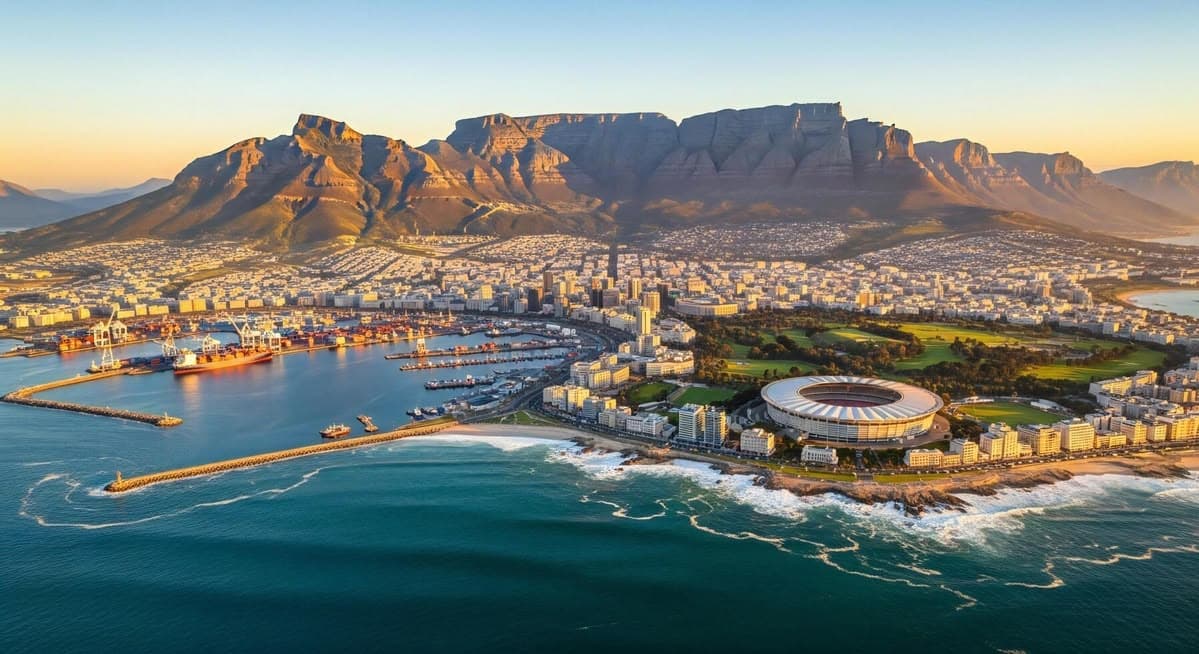
South Africa is among the longest premium markets we quote, and the distance is what shapes every decision on the route. Delta's Atlanta service to Cape Town runs close to sixteen hours in the air, placing it among the longest nonstops operating anywhere in the world. At that length the cabin is not a comfort upgrade. It determines whether the first two days on the ground belong to you or to your recovery, which is a different calculation from the one most travelers are used to making.
Only three US cities have a nonstop: Newark and Washington Dulles with United, and Atlanta with Delta. United runs Newark three times weekly on the Boeing 787-9 and now operates it through the year rather than seasonally, which was the meaningful change on this route. Washington Dulles remains seasonal and resumes in May 2026. Three routes from a country the size of the United States means most travelers are connecting somewhere regardless.
- From $2,989* round trip
- 1 destination covered
- All major airlines
- Personal quote in about an hour
South Africa
How much do business class flights to South Africa cost?
Recent business class fares to South Africa started around $2,989 round trip. What you pay depends far more on season and how far ahead you book than on which airline you fly.
Destinations in South Africa
*Prices based on recent bookings, subject to availability and seasonality.
South Africa business class FAQs
United from Newark three times weekly through the year, and seasonally from Washington Dulles from May 2026. Delta flies Atlanta to Cape Town. Those are the only nonstops from the United States.
Delta's Atlanta service runs close to sixteen hours in the air, among the longest nonstops in the world. One stop routings over Dubai, Doha or Istanbul typically add four to six hours door to door.
June through August, the southern winter, carries the lowest fares of the year. March into early May and September into November give you reliable weather at prices well under the December peak.
Often yes. Emirates and Qatar Airways both put a stronger cabin on the long sector than anything flying direct, and on a journey already approaching a full day the extra hours are a smaller trade than they look.
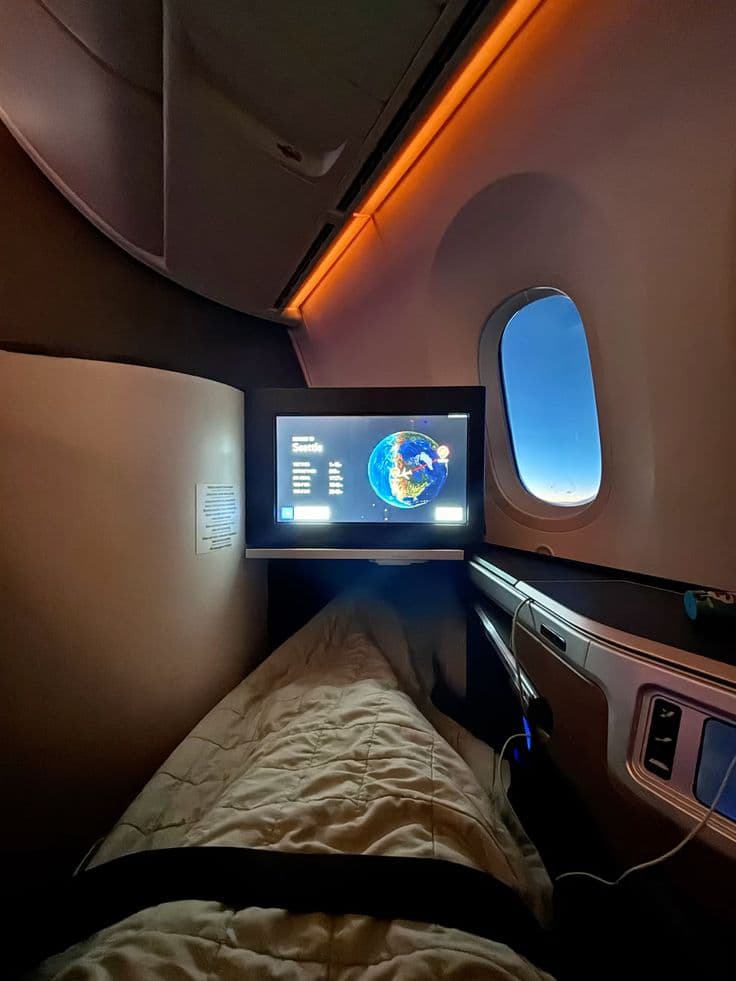
A real bed at 38,000 ft
What a business class ticket includes
From the moment you reach the airport to touchdown, every part of the journey is built to land you rested.
Priority check in
Fast track security and dedicated counters.
Premium lounges
Food, drinks and showers before you board.
Lie flat beds
Direct aisle access on long haul aircraft.
Fine dining
Multi course menus paired by sommeliers.
Amenity kits
Noise cancelling headphones, pyjamas, luxury kits.
Priority boarding
First on, first off, and extra baggage allowance.
Business Class Flights to South Africa: The Full Picture
Only three US cities have a nonstop: Newark and Washington Dulles with United, and Atlanta with Delta. United runs Newark three times weekly on the Boeing 787-9 and now operates it through the year rather than seasonally, which was the meaningful change on this route. Washington Dulles remains seasonal and resumes in May 2026. Three routes from a country the size of the United States means most travelers are connecting somewhere regardless.
Read moreShow less
That thin nonstop coverage is precisely why the one stop field matters so much here. Emirates over Dubai, Qatar Airways over Doha and Turkish over Istanbul all reach South Africa, and several of them do it with a considerably better cabin than anything flying direct. The trade is four to six hours added door to door. On a journey that already approaches a full day, that is a smaller sacrifice than it first appears, and it frequently buys a Qsuite instead of a standard flat bed.
The seasons are inverted and the swings are steep. December through February is the southern summer and the published peak, with the Christmas and New Year weeks the most expensive stretch of the entire year. The shoulder seasons, March into early May and September into November, hold reliable weather while the fares fall away sharply. The southern winter from June through August is the cheapest window and less of a compromise than people expect, particularly for the Winelands and the whale coast.
Frequencies are thin, typically three flights a week per route, and that constrains a trip far more than the fare does. Work out which days you can physically fly before you settle on dates, then let the price follow. Travelers who fix the dates first and shop the fare second routinely end up paying for a connection they did not need.
One practical note that applies across the country. Most US arrivals land in the morning after an overnight, which is exactly when the traffic into the cities is heaviest. Arrange ground transfers before you fly rather than at arrivals, and if the itinerary continues onward domestically, keep that leg on the same ticket so the connection stays protected.