



Business Class Flights to Brazil
From
$2,109*
Round trip from New York (JFK)
Enter your travel details now and get a customized quote from a dedicated travel expert







Flying business class to Brazil
Brazil is the deepest premium market in South America from the United States, and 2026 made it deeper still. Five US gateways now carry a nonstop to Rio de Janeiro alone, GOL began flying its own aircraft into New York JFK over the summer, and American adds Dallas Fort Worth from September. More carriers competing for the same passengers is the mechanism that loosens fares, and this market has just gained two new sources of it.
The flat bed argument here is different from the one on a transatlantic route. Brazil sits only an hour or two off US east coast time depending on the season, so there is no jet lag waiting on arrival. What there is instead is a nine to ten hour overnight, which means the cabin decides whether your first day is usable or spent recovering. On this route the seat buys you a day rather than buying you a week of adjustment.
- From $2,109* round trip
- 2 destinations covered
- All major airlines
- Personal quote in about an hour
Brazil
How much do business class flights to Brazil cost?
Recent business class fares to Brazil started around $2,109 round trip on the lowest of the 2 routes we cover, and around $3,050 on the highest. What you pay depends far more on season and how far ahead you book than on which airline you fly.
Destinations in Brazil

*Prices based on recent bookings, subject to availability and seasonality.
Brazil business class FAQs
Delta from Atlanta and New York JFK, American from Miami and JFK with Dallas Fort Worth from September 2026, United from Houston, and LATAM over its Sao Paulo hub. GOL added New York JFK service in the summer of 2026.
April through September, the southern autumn and winter. December through February is the published peak, and Carnival week is the most expensive of the year by a wide margin.
Very little. Brazil sits only an hour or two off US east coast time depending on the season. The overnight is long, but there is no time zone recovery waiting for you on arrival.
Often yes. Guarulhos carries far more North American frequency than the other airports, and adding the domestic leg to the same ticket can price below a direct routing while keeping the connection protected.
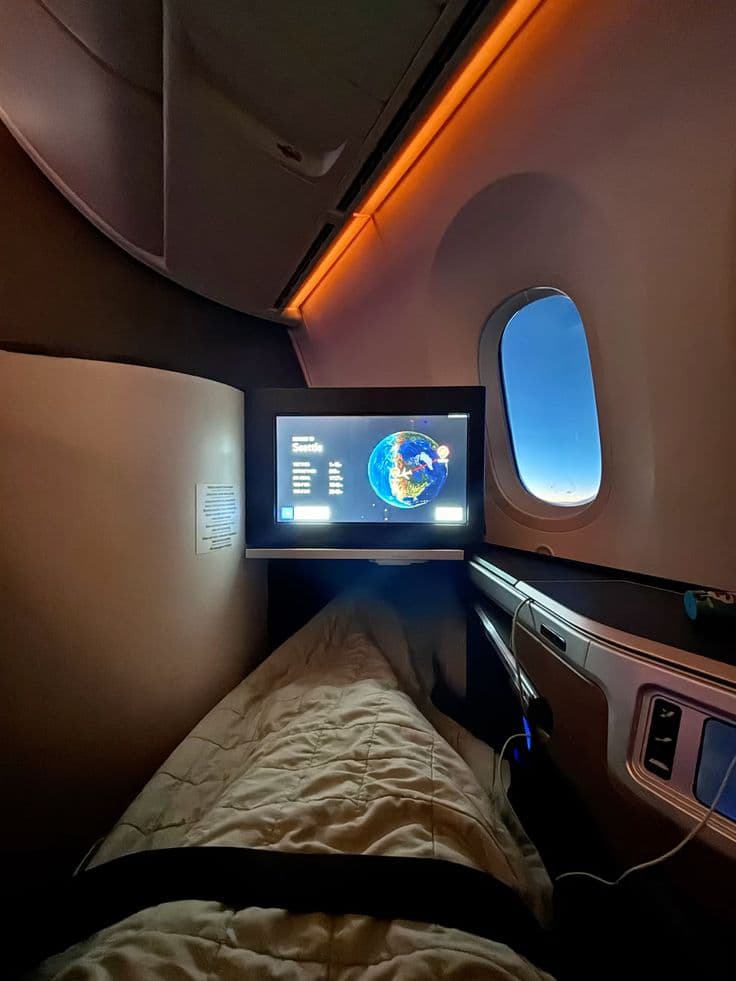
A real bed at 38,000 ft
What a business class ticket includes
From the moment you reach the airport to touchdown, every part of the journey is built to land you rested.
Priority check in
Fast track security and dedicated counters.
Premium lounges
Food, drinks and showers before you board.
Lie flat beds
Direct aisle access on long haul aircraft.
Fine dining
Multi course menus paired by sommeliers.
Amenity kits
Noise cancelling headphones, pyjamas, luxury kits.
Priority boarding
First on, first off, and extra baggage allowance.
Business Class Flights to Brazil: The Full Picture
The flat bed argument here is different from the one on a transatlantic route. Brazil sits only an hour or two off US east coast time depending on the season, so there is no jet lag waiting on arrival. What there is instead is a nine to ten hour overnight, which means the cabin decides whether your first day is usable or spent recovering. On this route the seat buys you a day rather than buying you a week of adjustment.
Read moreShow less
Sao Paulo is the country's real aviation hub and it is worth considering even when it is not your destination. Guarulhos carries far more North American frequency than any other Brazilian airport, and pairing a Sao Paulo business class ticket with a domestic leg on the same booking sometimes prices below a nonstop to the coastal cities. Keeping both legs on one ticket protects the connection and costs very little.
The seasons are inverted and the fare curve follows them precisely. December through February is Brazilian summer and the published peak, with Carnival the single sharpest week of the year and the premium cabins gone months in advance. The value window is the southern autumn and winter, roughly April through September, when the weather across the southeast is dry and mild and the fares reach their lowest point.
That calendar matters more here than the booking window does. On a European route, booking sixty to ninety days ahead handles most of the pricing. Into Brazil, moving the trip three weeks either side of Carnival or the New Year does more for the fare than any amount of early booking, and it is the first lever worth pulling if the dates have any flexibility at all.
One practical note on the ground. Brazilian airport transfers routinely take longer than the distance suggests, particularly into Rio, where Galeao sits roughly twenty kilometres north of the beaches. Arrange the car before you land rather than sorting it at arrivals, especially on a morning arrival when the traffic is heaviest.