


Business Class Flights to South Korea
From
$2,539*
Round trip from New York (JFK)
Enter your travel details now and get a customized quote from a dedicated travel expert







Flying business class to South Korea
South Korea is among the best served long haul markets in Asia from the United States, and the fares reflect that directly. As of June 2026 roughly 462 flights a week operated between America and Incheon. Set that against China, where three carriers manage a couple of dozen weekly flights, and the price gap between the two markets stops being puzzling. Depth of service is the strongest single predictor of what a business class seat costs.
The market did consolidate recently, and it is worth knowing. Asiana's nonstop frequencies were retired between October 2025 and March 2026 as the merger with Korean Air completed, removing one of the two Korean flag carriers as an independent competitor. That would ordinarily push fares upward. The reason it has not is that the American carriers compete hard on the route and absorbed the pressure.
- From $2,539* round trip
- 1 destination covered
- All major airlines
- Personal quote in about an hour
South Korea
How much do business class flights to South Korea cost?
Recent business class fares to South Korea started around $2,539 round trip. What you pay depends far more on season and how far ahead you book than on which airline you fly.
Destinations in South Korea
*Prices based on recent bookings, subject to availability and seasonality.
South Korea business class FAQs
Korean Air from San Francisco daily and other US gateways, Delta from Atlanta, Detroit, Minneapolis and Seattle, and United from San Francisco and Los Angeles daily with Newark seasonally.
No. Those frequencies were retired between October 2025 and March 2026 as the Korean Air merger consolidated the two networks.
Winter, when the weather is cold and dry and demand falls away. September into November is the best time to visit and spring is a close second, but both carry higher fares.
It is the best in northeast Asia. Korean Air feeds onward across China, Japan and southeast Asia, and keeping that leg on the same ticket protects the connection for very little extra.
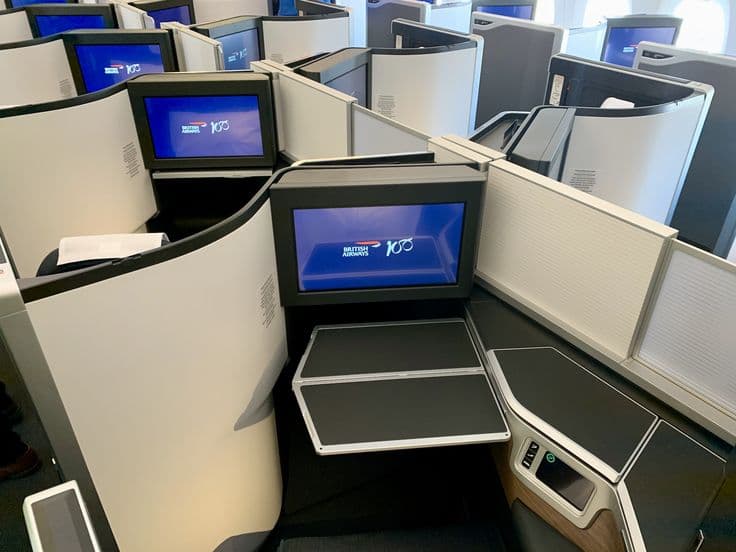
A suite with a closing door
What a business class ticket includes
From the moment you reach the airport to touchdown, every part of the journey is built to land you rested.
Priority check in
Fast track security and dedicated counters.
Premium lounges
Food, drinks and showers before you board.
Lie flat beds
Direct aisle access on long haul aircraft.
Fine dining
Multi course menus paired by sommeliers.
Amenity kits
Noise cancelling headphones, pyjamas, luxury kits.
Priority boarding
First on, first off, and extra baggage allowance.
Business Class Flights to South Korea: The Full Picture
The market did consolidate recently, and it is worth knowing. Asiana's nonstop frequencies were retired between October 2025 and March 2026 as the merger with Korean Air completed, removing one of the two Korean flag carriers as an independent competitor. That would ordinarily push fares upward. The reason it has not is that the American carriers compete hard on the route and absorbed the pressure.
Read moreShow less
Korean Air flies San Francisco daily, a twelve hour sector covering 5,600 nautical miles, alongside a wider spread of US gateways. United operates San Francisco and Los Angeles daily with Newark seasonally on the Boeing 787-9. Delta is the deepest of the American operators, reaching Incheon nonstop from Atlanta, Detroit, Minneapolis and Seattle. Between them, most of the country is covered without a positioning flight.
Incheon is also the best connecting hub in northeast Asia and that matters even when Korea is not the final destination. Korean Air feeds onward across China, Japan and southeast Asia from an airport that consistently ranks among the finest in the world. If the itinerary continues past Korea, keeping the onward leg on the same ticket protects the connection and adds very little to the fare.
Twelve hours from the West Coast and closer to fourteen and a half from the East puts this firmly in flat bed territory, and the thirteen hour time difference from New York is about as disruptive as time zones get. You lose a day outbound and gain one coming home. Arriving able to function on the first day is worth more here than on any European route, and that is the honest argument for the cabin rather than any amount of talk about the seat itself.
Seasonally the shoulders beat the peaks. Autumn, from September into November, is dry and clear and is the best time to visit. Spring from April into early June brings the blossom and mild weather. Summer is hot, humid and monsoon prone; winter is cold and dry and carries the lowest fares of the year.